Choosing the right concrete pump and floater plays a vital role in the success of any construction project. Whether you are building a residential house, a commercial complex, or an industrial floor, the quality of concrete placement and finishing directly affects strength, durability, and overall appearance.

Many project delays and surface defects occur not because of poor concrete quality, but due to wrong equipment selection. Understanding how concrete pumps and floaters work—and when to use them—can save time, money, and effort.

This detailed guide by Balaji Ready Mix Concrete will help you understand how to choose the right concrete pump and floater for your specific project needs.

Why Choosing the Right Concrete Pump & Floater Is Important

Concrete work is more than just mixing and pouring. It involves accurate placement, controlled flow, and proper surface finishing. Selecting the correct tools ensures that concrete reaches the right location smoothly and is finished to the desired quality.

Using the wrong concrete pump or floater can lead to uneven surfaces, material wastage, higher labor costs, and poor structural performance.

Before discussing types and selection methods, it is important to understand how these tools contribute to construction efficiency and concrete quality.

Benefits of Using the Right Concrete Equipment

  • Faster concrete placement
  • Reduced manual handling
  • Uniform concrete distribution
  • Smooth and strong surface finish
  • Improved project productivity

Understanding Concrete Pumps

Concrete pumps are essential machines used to transfer ready mix concrete from the mixer to the required location on the construction site. They allow concrete to be placed efficiently, especially in areas that are difficult to access manually.

Before choosing a concrete pump, you should understand the different types available and their specific uses.

What Is a Concrete Pump?

A concrete pump is a mechanical device designed to pump liquid concrete through pipelines or booms to the pouring point. It ensures consistent flow and accurate placement, even at heights or long distances.

Concrete pumps are widely used in residential, commercial, and industrial construction projects.

Types of Concrete Pumps Used in Construction

There are different types of concrete pumps available, and each is suitable for specific construction needs. Selecting the right one depends on project size, site conditions, and concrete volume.

Boom Concrete Pump

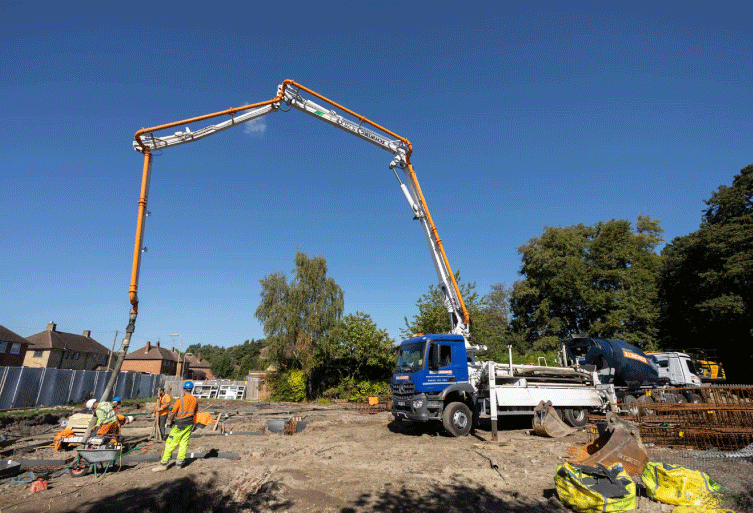
A boom concrete pump is mounted on a truck and uses a robotic arm (boom) to place concrete precisely.

Boom pumps are commonly used in large-scale construction projects where concrete needs to be delivered at great heights or over long distances.

Best suited for:

  • High-rise buildings
  • Commercial complexes
  • Large infrastructure projects

Key advantages:

  • High accuracy
  • Fast concrete placement
  • Reduced labor dependency

Line Concrete Pump

A line concrete pump uses flexible pipelines or hoses to transport concrete horizontally or vertically.

This type of pump is highly popular for small to medium construction projects.

Best suited for:

  • Residential buildings
  • Small commercial sites
  • Driveways and pavements

Key advantages:

  • Cost-effective
  • Easy to install
  • Ideal for tight spaces

How to Choose the Right Concrete Pump

Selecting the right concrete pump requires careful evaluation of your project conditions. Every construction site is different, and choosing wisely can significantly improve efficiency.

Project Size and Concrete Volume

Large projects require high-capacity pumps like boom pumps, while smaller projects can be handled efficiently using line pumps.

Height and Distance Requirements

  • Tall buildings → Boom concrete pump
  • Ground-level or short-distance work → Line concrete pump

Site Accessibility

Congested or narrow sites require flexible pumping solutions to avoid blockages and delays.

Understanding Concrete Floaters

After concrete is placed, finishing becomes the next critical step. This is where concrete floaters play an important role.

Concrete floaters help level the surface, remove imperfections, and prepare the concrete for final finishing.

Before choosing a floater, it is essential to understand how it works and what types are available.

What Is a Concrete Floater?

A concrete floater is a finishing tool used on freshly poured concrete to smooth the surface. It helps embed aggregate, remove excess moisture, and create a uniform finish.

Proper floating ensures better durability and surface strength.

Types of Concrete Floaters

Different projects require different finishing tools. Choosing the right concrete floater depends on surface area and finish quality requirements.

Hand Concrete Floater

A hand floater is a manually operated tool used for small or detailed areas.

Best suited for:

  • Residential slabs
  • Small repair works
  • Edges and corners

Advantages:

  • Easy to use
  • Low cost
  • High control for detail work

Power Floater (Power Trowel)

A power floater is a motorized finishing machine used for large concrete surfaces.

Best suited for:

  • Industrial floors
  • Warehouses
  • Parking areas

Advantages:

  • Faster finishing
  • Professional smooth surface
  • Consistent finish quality

How to Choose the Right Concrete Floater

Choosing the correct floater is just as important as selecting the pump. The finishing stage directly affects the appearance and performance of the concrete.

Size of the Concrete Surface

Small areas can be managed with hand floaters, while large slabs require power floaters for efficiency.

Required Finish Quality

For smooth, polished, or heavy-duty floors, power floaters deliver superior results.

Project Timeline

Tight deadlines require faster finishing tools to avoid surface defects during curing.

Matching Concrete Pump & Floater to Your Project Type

Every construction project has unique requirements. Matching the right concrete pump and floater ensures optimal results.

Residential Construction Projects

Residential projects usually involve limited space and moderate concrete volume.

Recommended equipment:

  • Line concrete pump
  • Hand concrete floater

Ideal for houses, driveways, footpaths, and small slabs.

Commercial Construction Projects

Commercial buildings demand speed, precision, and quality finishing.

Recommended equipment:

  • Boom concrete pump
  • Power floater

Suitable for offices, malls, and multi-storey structures.

Industrial and Infrastructure Projects

Industrial floors and infrastructure works require heavy-duty equipment for large concrete volumes.

Recommended equipment:

  • High-capacity concrete pump
  • Industrial power floater

Perfect for factories, warehouses, and road construction.

Common Mistakes to Avoid When Choosing Concrete Equipment

Many construction issues arise due to incorrect equipment selection. Avoiding common mistakes can save significant time and cost.

Choosing Equipment Based Only on Price

Low-cost equipment may increase labor, delay work, and reduce quality.

Ignoring Site Conditions

Site layout, space constraints, and accessibility should always be considered.

Not Consulting Concrete Experts

Professional guidance ensures the right pump and floater selection for long-term performance.

Why Choose Balaji Ready Mix Concrete?

At Balaji Ready Mix Concrete, we understand the importance of proper concrete placement and finishing. We offer reliable ready mix concrete and concrete pump services tailored to different project requirements.

What We Offer

  • High-quality ready mix concrete
  • Reliable concrete pump solutions
  • Expert technical guidance
  • On-time delivery and support

Our experience ensures strong, durable, and smooth concrete structures for every project.

Final Thoughts

Choosing the right concrete pump and floater is essential for achieving high-quality construction results. From accurate concrete placement to smooth finishing, the right equipment enhances efficiency, durability, and appearance.

By understanding your project size, site conditions, and finishing needs, you can make informed decisions that save time and money.

For expert support and premium concrete solutions, Balaji Ready Mix Concrete is your trusted partner.

FAQs

Have questions? We’ve answered some of the most common queries to help you understand the topic better

1. What is the best concrete pump for house construction?

A line concrete pump is best for residential projects due to easy handling and cost efficiency.

2. When should a power floater be used?

Power floaters are ideal for large concrete surfaces like industrial floors and warehouses.

3. Why is concrete finishing important?

Proper finishing improves surface strength, durability, and appearance.

4. Can one concrete pump be used for all projects?

No, pump selection depends on project size, height, and site conditions.

5. Does Balaji Ready Mix Concrete provide pump services?

Yes, Balaji Ready Mix Concrete offers professional concrete pump services along with quality ready mix concrete.

Post a comment

Your email address will not be published.

Related Posts