Concrete is the foundation of every strong and long-lasting structure. From homes and commercial buildings to roads, bridges, and large infrastructure, concrete plays a major role in shaping the modern construction industry. Choosing the right type of concrete ensures durability, safety, strength, and long-term performance. In this detailed guide, we will explore the different types of concrete used in construction, their applications, benefits, and how to select the right mix for your project.
What Makes Concrete So Important in Construction?
Before exploring the different types, it’s important to understand why concrete remains the most widely used construction material. The combination of cement, sand, aggregates, and water creates a highly durable and versatile material suitable for almost every kind of building project.
Concrete is resistant to weather, fire, moisture, and heavy loads, making it ideal for both small residential projects and large industrial applications. This is why civil engineers and contractors carefully select the right concrete mix depending on load requirements, environmental conditions, and structural needs.
Concrete types not only differ in strength but also in workability, setting time, and performance. This makes selecting the correct mix crucial for long-term durability and safety.
1. Normal Strength Concrete (NSC)
Normal Strength Concrete is the most basic and widely used concrete type. It follows the traditional 1:2:4 ratio of cement, sand, and aggregates. This concrete provides moderate strength, making it suitable for general construction work.
Before moving to its applications, it’s important to note that normal strength concrete is preferred for projects where high compressive strength is not a priority. Its simplicity and affordability make it the first choice for regular building needs.
Where Normal Strength Concrete Is Used?
- House flooring
- Footpaths
- Driveways
- Simple slabs
- Non-structural components
2. Ready Mix Concrete (RMC)
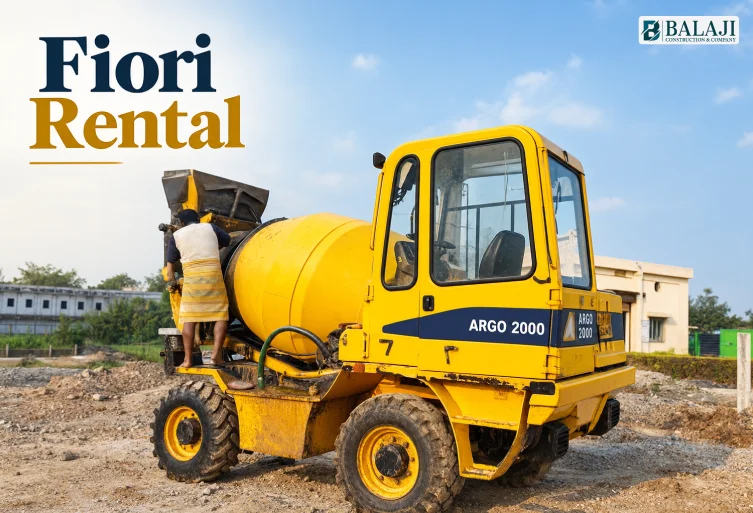
Ready Mix Concrete has become the most popular choice for modern construction. It is manufactured in a controlled batching plant and transported to the construction site using transit mixers. This ensures consistent quality, accuracy, and durability.
Before exploring its advantages, it is important to understand why RMC has replaced traditional site-mixed concrete. The main reason is that builders and contractors now prefer precision, reliability, and time efficiency.
Why Ready Mix Concrete Is Important for Modern Construction?
- High-quality, factory-controlled mix
- Saves labor and time
- Reduces material wastage
- Offers excellent workability
- Ensures long-lasting strength
3. High-Strength Concrete (HSC)
High-Strength Concrete is designed for greater load-bearing capacity. It is usually of grade M40 and above. This concrete is used when structures require extraordinary strength and long-term durability.
Before discussing applications, it helps to understand that high-strength concrete uses reduced water-cement ratios and premium additives, making it more powerful than standard concrete mixes.
When Should You Use High-Strength Concrete?
- Skyscrapers
- Long-span bridges
- Heavy industrial zones
- High-load columns
- Multi-level parking structures
4. Reinforced Cement Concrete (RCC)
Reinforced Cement Concrete is a combination of concrete and steel reinforcement. While concrete is strong in compression, it is weak in tension. Steel reinforcement compensates for this weakness, making RCC perfect for load-bearing structures.
Before moving to its applications, it’s important to mention that RCC is the backbone of most structural components used in modern construction.
Applications of Reinforced Cement Concrete
- Foundations
- Columns
- Beams
- Slabs
- Staircases
- Retaining walls
5. M-Grade Concrete Types (M10 to M50)
Concrete grades indicate compressive strength. M-grade concretes are used based on structural needs. Each grade has a different ratio of cement, sand, and aggregates.
Before listing the grades, it’s important to note that choosing the right grade of concrete impacts safety, durability, and building design.
Popular M-Grade Concretes Used in Construction
- M10 / M15 – Ideal for leveling and non-structural work
- M20 – Perfect for slabs, beams, and residential construction
- M25 / M30 – Commonly used for commercial buildings
- M40 – M50 – Suitable for bridges, heavy load structures, and high-rise buildings
6. Lightweight Concrete
Lightweight Concrete uses lightweight aggregates like pumice, expanded clay, or vermiculite. This reduces density while maintaining adequate strength.
Before learning its uses, it’s necessary to know that lightweight concrete offers better thermal insulation and lowers the overall dead load on structures.
Best Uses of Lightweight Concrete
- Roof insulation
- Prefabricated wall blocks
- Long-span structures
- Reducing dead load in high-rise buildings
7. Self-Compacting Concrete (SCC)
Self-Compacting Concrete flows easily without vibration, making it an ideal choice for highly reinforced structures. Its high fluidity ensures uniform compaction.
Before exploring why it’s used, it’s important to understand that SCC reduces human effort and increases the quality of construction work.
Why Self-Compacting Concrete Is Popular?
- Saves labor cost
- Improves surface finishing
- Offers excellent flowability
- Reduces construction time
- Works well in complex formwork
8. High-Performance Concrete (HPC)
High-Performance Concrete is engineered to deliver superior strength, durability, workability, and chemical resistance. It performs well in harsh environments and under heavy usage.
Before discussing applications, it’s important to highlight that HPC includes high-quality cement, mineral admixtures, and chemical additives to ensure high performance.
Where HPC Is Used?
- Marine structures
- Dams
- Industrial floors
- High-traffic roads
- Coastal constructions
How to Choose the Right Type of Concrete for Your Project?
Choosing the right concrete mix depends on several factors. Understanding these aspects helps ensure your structure remains strong, safe, and durable for years.
Before listing these factors, it’s valuable to know that concrete selection varies depending on building design, project size, and expected load.
- Type of structure (residential, commercial, industrial)
- Required load-bearing capacity
- Environmental and weather conditions
- Construction speed needed
- Budget and material availability
- Durability requirements
Conclusion
Concrete is the building block of modern construction. Understanding the different types of concrete helps engineers, contractors, and property owners make the right decisions during construction. Whether you choose Ready Mix Concrete for efficiency, RCC for strength, M20 or M25 for structural needs, or High-Strength Concrete for demanding projects, selecting the right mix ensures long-term safety and quality.
Using the correct concrete type not only improves the structural performance but also enhances durability, reduces maintenance, and ensures the project stands strong for decades. Choosing a trusted supplier like Balaji Ready Mix Concrete guarantees high-quality mixes prepared with precise standards, ensuring every construction project achieves the best results.
FAQs
Have questions? We’ve answered some of the most common queries to help you understand the topic better
1. Which type of concrete is best for house construction?
M20 grade concrete and Ready Mix Concrete are commonly used for residential slabs, beams, and columns.
2. What is the difference between RMC and normal concrete?
RMC is factory-made with accurate proportions, while normal concrete is manually mixed on-site.
3. Which concrete is used for high-rise buildings?
High-Strength Concrete (M40 and above) and RCC are used for high-rise structures.
4. What is the strongest type of concrete?
Ultra High-Strength Concrete and High-Performance Concrete offer the highest compressive strength.
5. Why is Ready Mix Concrete preferred in modern construction?
It saves time, reduces waste, offers consistent quality, and ensures faster project completion.
Post a comment Cancel reply
Related Posts
Badli Fiori Rental Services – Affordable & Efficient
The construction industry in Badli, Rajasthan, is witnessing rapid growth, driven by residential, commercial, and…
Concrete Boom Pumps Are Available For Rent in Ajmer
When it comes to modern construction, speed, efficiency, and precision are not optional—they are mandatory.…
Sarwar RMC Plant – Smooth Concrete Pouring for Modern Construction
Construction activity in Sarwar and the Ajmer district of Rajasthan has increased rapidly in recent…
Parbatpura Builders Choose Fiori Rental for Faster Construction
Parbatpura in the Ajmer district is rapidly becoming a hub for residential and commercial development.…